Board exams cause anxiety. You sit at your desk staring at a pile of books, wondering where to start. Two study tools sit in front of you: the new CBSE sample papers and a stack of previous year papers. Picking one feels impossible. This article explains the differences between these two papers to help you choose the right one for your revision schedule.
Understanding CBSE Sample Papers
The central board releases sample papers a few months before the exams begin. Subject experts write these papers based on the exact syllabus for that academic year.
These papers show the newest question types, like case studies or multiple-choice formats. The difficulty level matches what you will face on the actual test day. You should attempt these papers a month or two before your exams. They work best as full-length mock tests to check your speed and accuracy with new formats.
Understanding Previous Year Papers
Previous year papers are the exact tests students wrote in past years. They act as a record of how the board tests specific subjects.
Solving these papers shows you which chapters carry the most marks. You will notice certain questions repeat almost every year. Start solving these papers right after you finish a chapter. They help build strong subject knowledge and highlight the high-scoring topics you cannot skip.
The Key Differences: A Comparative Look
Syllabus relevance and updates: Sample papers match the current year’s reduced or updated syllabus. Older papers might contain deleted chapters, so you have to cross-check the current syllabus before solving them.
Question pattern and difficulty: Sample papers show upcoming changes. Old papers show how questions were framed in the past.
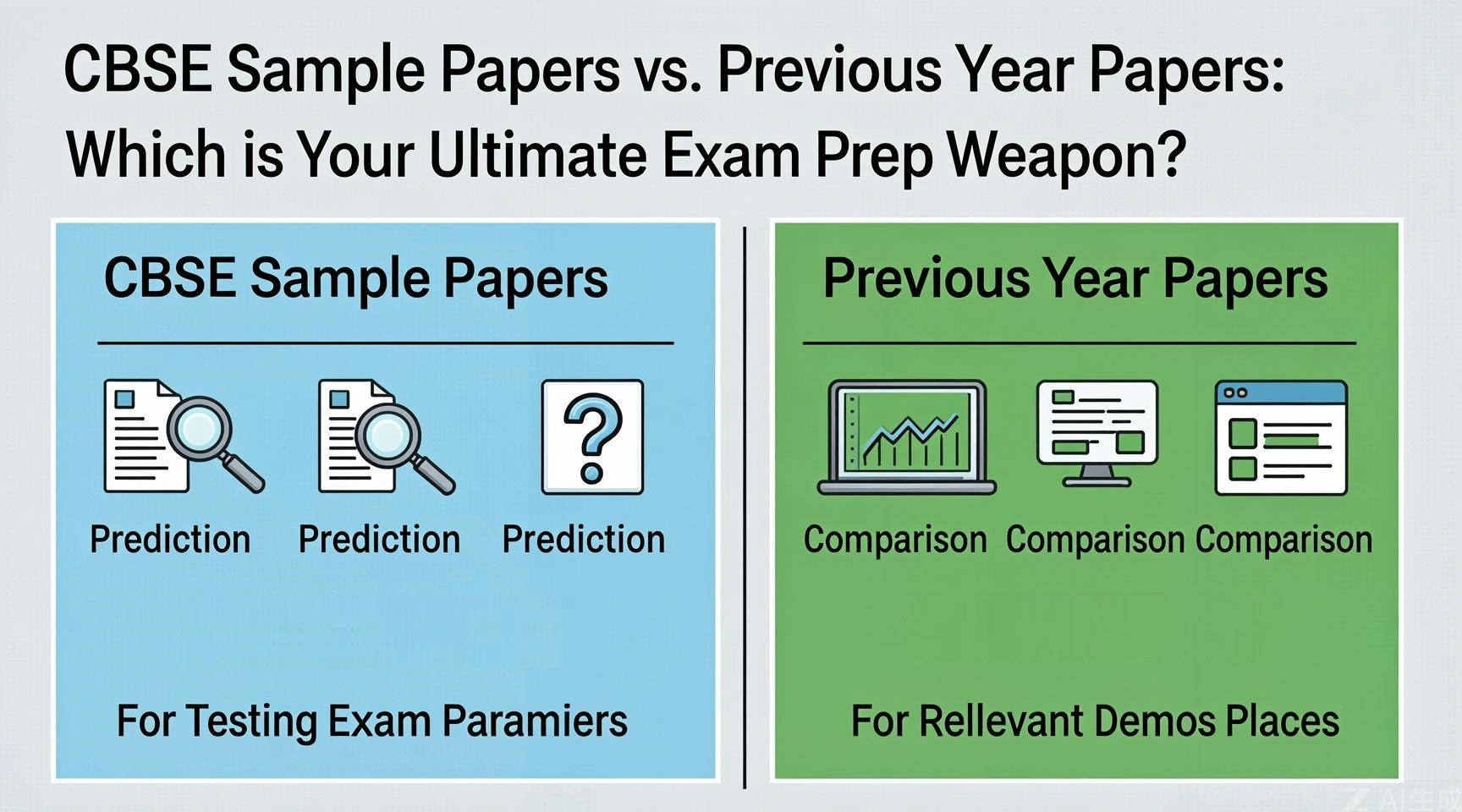
Focus: Sample papers predict the upcoming exam. Old papers track historical testing trends.
Availability and accessibility: The board publishes one official sample paper per subject each year. You can find ten years of past papers in bookstores or online with ease.
Which is “Better”? It Depends!
For understanding the latest exam format and difficulty: Sample papers win.
For mastering core concepts and identifying recurring themes: Previous year papers win.
For a full study plan: You need both resources.
How to Effectively Use Both Resources
Sample Papers: Save these for the final weeks. Print them out, set a timer for three hours, and write the test in a quiet room. Grade yourself against the official marking scheme to find gaps in answering new-style questions.
Previous Year Papers: Bring these into your study routine early. If you just finished a math chapter, find all the questions from that chapter across the last five years and solve them.
Integrated Approach: Alternate between the two during your revision. Take a sample paper on Monday to test your awareness of new patterns. Take an old paper on Wednesday to test your grip on heavy-mark chapters. Review your mistakes after each test to adjust what you study next.
Conclusion
Sample papers show you what the upcoming test looks like. Previous year’s papers show you which topics matter most. Picking one over the other leaves a gap in your prep. A balanced routine that mixes both tools gives you the best chance to score high. Grab a sample paper and an old paper, sit down with a pen, and start practicing. Your boards are just a few practice tests away.